Literature

Twelfth Friend: John Crowe Ransom, Bells for John Whiteside's Daughter
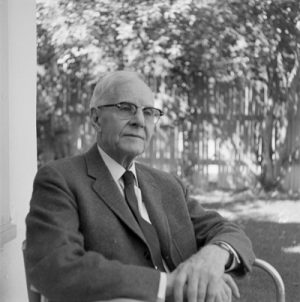
Today’s friend is a good Tennessean, Mr. John Crowe Ransom. Even if you don’t read much poetry, if you read a lot of Southern or political history you may recognise Mr. Ransom as one of the Southern Agrarians, a contributor to I’ll Take My Stand. Some schools will also touch on his critical ideas, since he was important to New Criticism, which, very briefly, emphasises reading literature as self-contained, without too much emphasis on the author, social background, and the like. Of course, this is mostly covered at the college level if the student is lucky. I took a course on Southern literature specifically and even there, we only touched on Mr. Ransom’s work (coincidentally, we spent more time discussing New Criticism in a course on British literature). He also edited the poetry magazine The Fugitive, and taught first at Vanderbilt University and then Kenyon College, in Ohio.

Eleventh Friend: James Shirley, "The Glories of our Blood and State"

I admit I’m not very familiar with today’s friend, James Shirley, except for the general knowledge that he’s a celebrated playwright, and wrote in the first half of the 17th Century. My only experience with his work are the poems and excerpts from my collection of the Cavalier poets, but his inclusion in that anthology is a good sign that he’s worth getting to know better. He was apparently a Catholic convert, and a supporter of the Royalist side in the English Civil War (though apparently he left the field and went to London when the tide began to turn against the King). Needless to say, his career as a dramatist came to an end under the Commonwealth, and he supported himself by teaching and writing educational work until his death in the Great Fire of London in 1666.

Tenth Friend: Henry VI, "Kingdomes are but Cares"

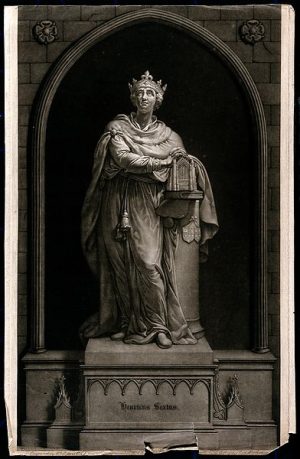
This poem is of interest partly because it’s good on its own terms, but also because of who wrote it. Today’s friend, you see, is none other than King Henry VI. There have been a few monarchs who’ve written poetry, but not many. At least, not in English culture; in Japan, for example, it was very common, and emperors are well-represented in classic anthologies there.

In any case, in this poem, His Majesty reflects on his own royal position:

Ninth Friend: Edmund Spenser, "Amoretti LXXV: One Day I Wrote her Name"

No, I didn’t forget about my goal of making a hundred friends by memorising their poems. I just took a break to reconsider the feasibility of this project, but have decided to go forward.

So, today we meet Edmund Spenser. You know Mr. Spenser, right? He was born in 1552 or 1553, the son of a journeyman clothmaker, went to Pembroke College but required financial assistance to do so (apparently, doing menial work for the college), and as an adult spent much of his career as a government official in Ireland. He became well-known in his own time, though, for his poetry and especially for his epic, The Faerie Queene.

Olympic Level Poetry: Pindar's Odes

After covering Sappho a couple weeks ago, I figured I’d move on to another of Greece’s most famous poets, Pindar. Fortunately, his work is much better preserved than the poetess of Lesbos, as we have several dozen of his poems. He made his name writing odes for the victors of the four Panhellenic games, the Olympian being the most famous of these, but also including the Isthmian, Nemean, and Pythian. To be specific, these odes were choral lyrics, which means that they were sung with musical accompaniment. Unfortunately, as far as I’m aware, we have little idea of what this music would’ve sounded like, so the words must stand on their own.

Sixth Friend: Vachel Lindsay, "Factory Windows are Always Broken"

I hope you brought a gift, because today is this friend’s birthday - Vachel Lindsay turns 138 years old today, having been born in Springfield, Illinois in 1879. Mr. Lindsay was quite popular early in his career, but his popularity began to decline later in his life and, unfortunately, has waned more since then. He started out selling self-published work on the streets, in New York in 1905 and during treks across the country on foot in 1906, ‘08, and ‘12. He caught a break when Poetry Magazine, at the time still new and already influential in the literary world, published “General William Booth Enters into Heaven” in 1913, and “The Congo,” which we’ll get to shortly, in 1914. Once his popularity took off, his tours and public performances were very successful, but his fame peaked early. His fortunes declined until, in 1931, he committed suicide by drinking a bottle of Lysol.

Edgar Allan Poe and Engineering Poetry

There’s no better time than October to revisit Edgar Allan Poe, and since I already covered his short stories last year, this year I thought we’d move on to his poetry. Unfortunately, we risk doing so at some thematic loss. Yes, his short stories are mostly horror, and so is his most famous poem, “The Raven,” but most of his poetry doesn’t really fit that category. Some of it’s still morbid, though, as beautiful young women have the same astonishing mortality rate here as they do in the stories, but to keep things seasonal I’ll focus on his most popular work.

Brief Thoughts on Harold Bloom's How to Read and Why

I just finished listening to the audiobook version Harold Bloom’s 2001 book, How to Read and Why. I often enjoy books about books, and since I’m occasionally asked for advice on how to jump into literature and Bloom seems to be a well-respected writer, I thought it’d be worth giving a shot. Overall, it’s good and I’d recommend it, but with some conditions and, for most people, not before a couple other works in the genre.

Fourth Friend: John Milton, "Sonnet XIX: When I Consider How my Light is Spent"

If you’ve been on social media for any significant length of time, you’ve probably seen a meme purporting to show books typical for each of the three major branches of Christianity. For Catholicism, it has Dante Alighieri’s The Divine Comedy, for Eastern Orthodoxy, Fyodor Dostoyevsky’s The Brothers Karamazov, and for Protestantism, Joel Osteen’s Become a Better You. It’s funny, yes, but it also annoys me a little. For one thing, though I hate heresy and consider their revolt against the Church the greatest catastrophe of the past several centuries, I do have some sympathy for Protestants. I live in the American South, after all, which despite a significant Catholic presence is still a fundamentally Protestant place. Many of my friends belong to one of those denominations, and when I think of Protestants I first think, not of the despicable Luther and Calvin or the dopey Osteen, but of my Baptist grandfather, who in the last decade or so of his life approached his church with full sincerity, and collected an impressive library of different editions and translations of Scripture, comparing each and considering the commentaries of various theologians.

Second Friend: Alexander Pope, "A Little Learning"

After our brief visit in Japan, we come home to the English-speaking world to see one of our most famous poets, Mr. Alexander Pope. Though he did achieve financial stability and a good reputation during his lifetime as a respected poet and accomplished translator, his early life was difficult due to health problems (specifically, turberculosis of the spine, as well as being trampled by a cow as a child). Also, he was born in 1688, the same year as the “Glorious” Revolution, so he and his family were subject to the anti-Catholic legislation passed shortly afterward. For example, he was barred from attending university and so had to make due as an autodidact. This doesn’t seem to have held him back too much intellectually, though, and so he should serve as an inspiration for autodidacts everywhere.