A Visit to Brambly Hedge
Jill Barklem’s Brambly Hedge series is popular enough that I don’t think I need to spend much time introducing it. I’ll simply say that the books are a contender for the most beautifully illustrated children’s books I know, and the artwork seems to be what it’s most known for. The official website has a lot of merchandise featuring the art, from prints to mugs to calendars, which may seem a bit kitschy but honestly, I don’t blame anyone who wants to surround themselves with this art.
The other big appeal is the setting, which is extremely cozy. If your favourite setting in Middle Earth is the Shire, this book is for you. Not that there’s no adventure or conflict at all, but the conflicts are of the man (or mouse, rather) vs. nature variety, and even then not terribly intense, and most everyone lives quite peaceful, old-fashioned lives. This may not sound engaging, but it’s a pleasant read for those with the right disposition.
What I’d like to focus on here, though, is the book A Visit to Brambly Hedge, written by Jane Fior, at least primarily. Now, Barklem is credited as the primary author, and much of the work is hers, but given that this book came out in 2025 and Barklem passed away in 2017, I feel quite safe assuming that most of the work was done by Fior.
In any case, I’ll start by saying that the book is very well produced as a physical object, on par with the lovely single-volume collection of the stories. Given that one of the main appeals of Brambly Hedge is the aesthetics, the appearance of the book as a book, as well as the print quality of the illustrations, are important.
As for the content, we start with a brief introduction by Fior, offering a few words on what the setting meant to Barklem and laying out what the rest of the book will offer. Following that is a map of Brambly Hedge, which is neat but is already available in the printed books, or at least in the single volume collection.
Next are three family trees, which seem a bit superfluous - each only includes three generations, and Barklem never fleshed out a long history of this place the way that, say, J. R. R. Tolkien did with Middle Earth. Similarly, the next several pages are short bios of the major characters. This is the sort of thing one expects in a guide book to a fictional setting, but again, there were only eight of these stories, none very long (these are children’s books, after all), so there just aren’t all that many characters. I suppose there are enough that young readers may need help keeping track of everyone, but this kind of guide book is targeted more towards adult readers. My four year old daughter, for instance, enjoys the original books, but very quickly lost interest in this when she realised it wasn’t a story.
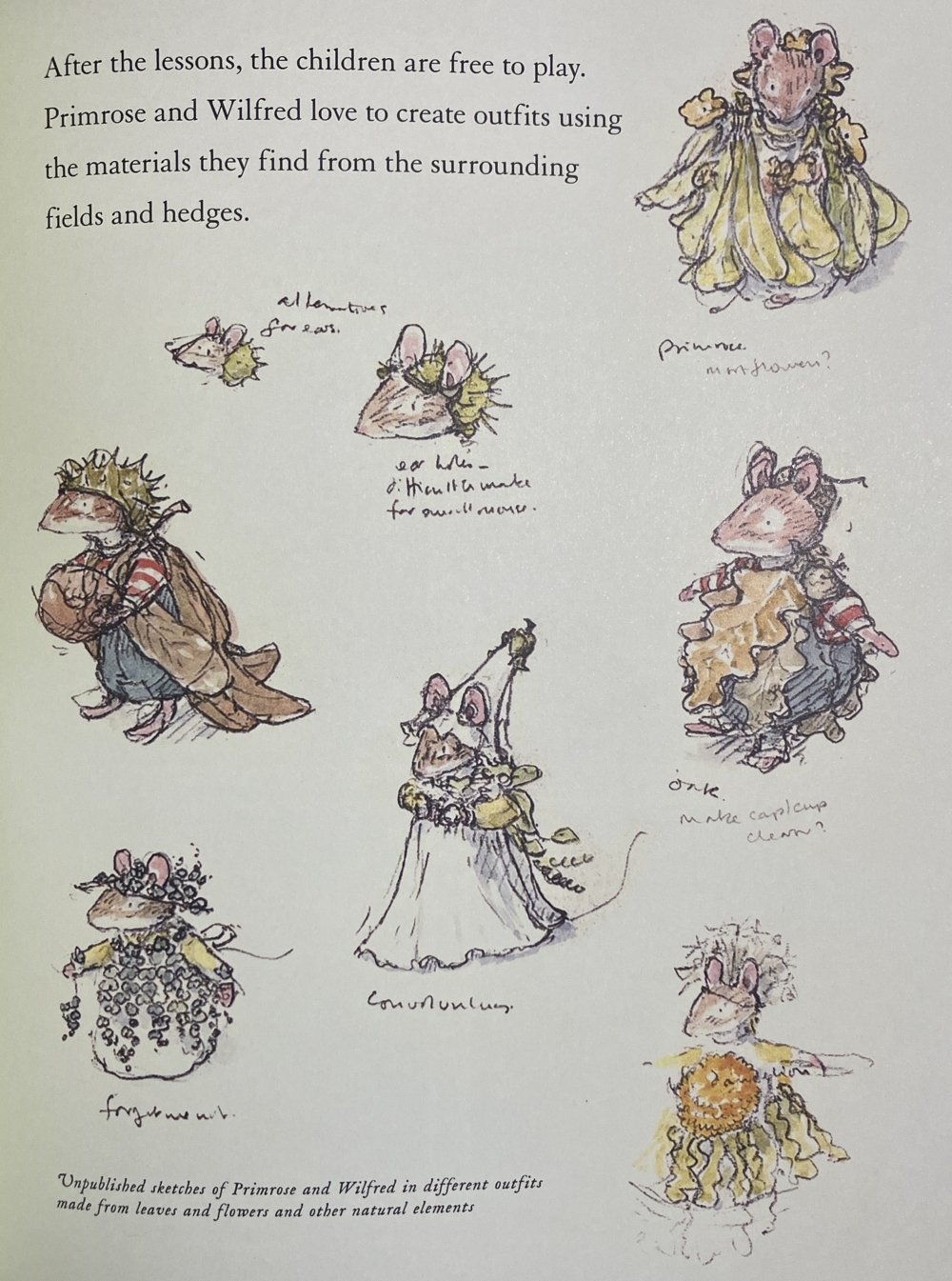
The next section is “The Houses of Brambly Hedge.” Again, there’s not a lot of substance here, but we do get to something genuinely interesting: A copy of a couple pages of Barklem’s early illustrations and notes on the design of Dusty’s flour mill. This is the kind of material I hoped for when I checked this book out from the library. I know what’s in the stories - I’ve read them already. What I don’t know is Barklem’s process for creating the characters and setting. After this are a few pages on school in Brambly Hedge, then a page of previously unpublished sketches of Primrose and Wilfred.
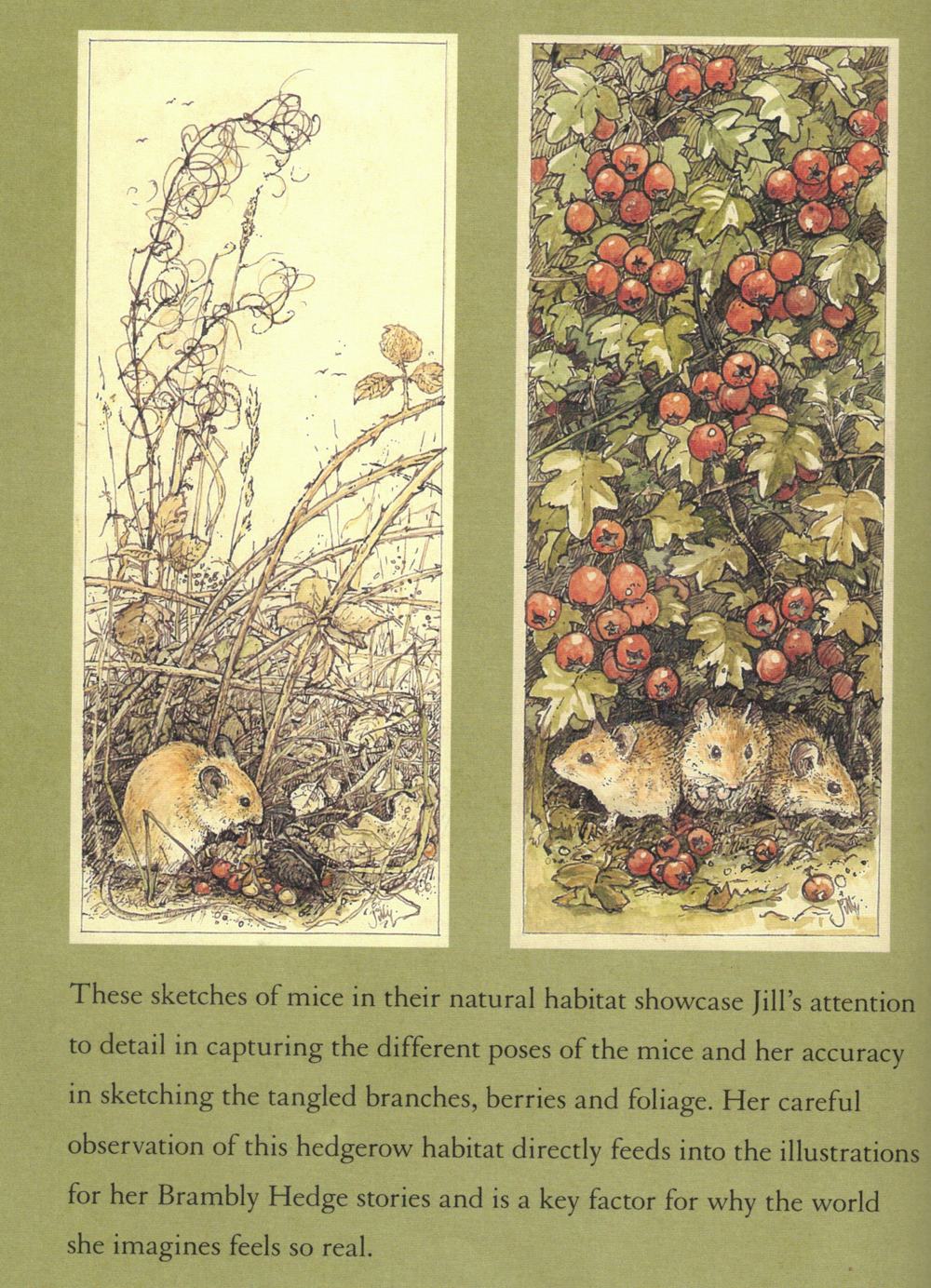
Next comes “The Four Seasons in Brambly Hedge,” most of which simply describes in explicit terms the mice’s lifestyle and practices, but which also includes a few more interesting points. One, a couple sketches of mice, real mice, in their natural habitat illustrating Barklem’s attention to detail in observing real animals. There are also some examples of early sketches compared with the final illustrations used in the books, a couple of which include about a paragraph of commentary. Again, this is what the bulk of Visit should’ve been.
Here we come to a few sections about the places surrounding Brambly Hedge and the characters who live there, which is structured just like the previous section.
Finally, at the very end of the book, is “How Brambly Hedge Began,” where Fior gives us thirteen heavily (and excellently) illustrated pages about Barklem’s life, her inspirations for Brambly Hedge, and some information about he publishing process. This part is thirteen of the books 108 pages, but I wish it was fifty of them.
So, is A Visit to Brambly Hedge worth getting? For the large majority of people, even the majority of Brambly Hedge fans, probably not. That said, for adult fans of the series who just can’t get enough of this setting, I can say that it does have just enough merits to justify a purchase.