Film and Animation

Uncle Walt-a-thon: Bambi

<– Uncle Walt-a-thon: The Three Caballeros

After a couple films in a row that I wasn’t really familiar with, we make it to a film I’ve seen many, many times with Bambi.

My first impression is that this film is beautiful. It’s one of the best-looking animated works I’ve ever seen. I’ve mentioned that some of the previous films’ backgrounds are soft and reminiscent of watercolours, and that’s the case here, as well, but Bambi has probably the most elaborate yet. The character animation is, needless to say, fluid throughout, and I imagine it took a lot of work to get such a variety of animals to all look right. The animation doesn’t go into any of the weird, experimental stuff I usually like; the closest it comes to something like “Pink Elephants” is in Bambi’s fight with a rival deer near the end. However, it does remind me of Fantasia’s Tchaikovsky segment with the lush colours and use of lighting, so I would consider this as a culmination of everything the studio had been working towards so far in animation technique.
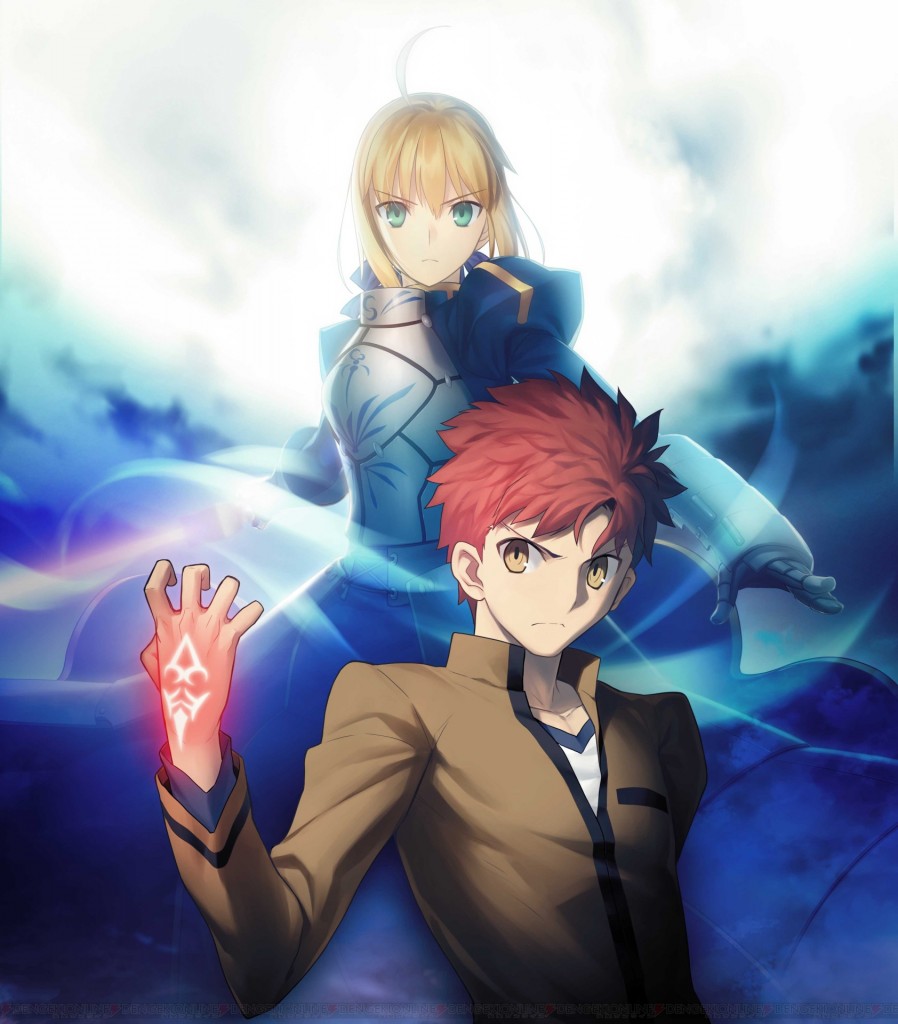
Fate/Zero on Glorious Blu-Ray: The Second Set

Just today, I finished rewatching the second season of Fate/Zero on the recently-release blu-ray box set. Since I’ve reviewed the full series as well as the first box set, I’ll go ahead and give my thoughts on this second set as well. Most of what I said about the first set will also apply to the second, so I’ll focus on the things that are different, including a few disappointments.

Once again, the video and audio is very well done. In the first set the studio, ufotable, added some material - a few shots in the episode where Rider and Waver find Caster’s hiedout, and several minutes to the episode “Discussing the Grail” (the episode which formed the basis of this post). Here, as far as I can tell, there is no new material; I assume there’s been some touch-up work, but if anything extra was added I didn’t notice.

Uncle Walt-a-thon: The Three Caballeros

<– Uncle Walt-a-thon: Fantasia

The Three Caballeros is another of the few Disney films on my list that I haven’t seen before, so I didn’t really know what to expect going in. What I knew of the premise, Donald Duck getting a tour of Latin America, didn’t sound especially promising, and the first part of the film gave me little hope, but a strong second half made the experience a pleasant surprise.

Uncle Walt-a-thon: Fantasia

<– Uncle Walt-a-thon: Dumbo

I’m fairly, but not entirely, sure I saw Fantasia as a child; however, I have almost no recollection of it, so going into this film I had very little idea of what to expect. Having seen it now, it’s easily my favourite Disney film yet, which shouldn’t surprise those who’ve read my thoughts on animation in general because Fantasia is easily Disney’s most experimental work outside of Dumbo’s pink elephants. Its seven shorts, each introduced by a live-action presenter with the whole film bookended by an orchestra setting up, are set to classical music and each intended to complement that music. They vary wildly in style, from abstract to fairly traditional. They also vary in how much they draw in one’s interest, and the film may have benefited from cutting out one or two.

Fated for Mediocrity: the Fate/Stay Night Anime

After finishing the excellent Fate/Zero anime adaptation, I decided to revisit Fate/Stay Night, the anime version, which I hadn’t seen in several years (before you visual novel people jump on me, I’m in the process of playing the VN and am a few hours into it). Though the show does have a few defenders, I’ve found that it’s much maligned by fans of the original. Though these critics often overstate their case, the show as a whole is a mediocre execution of a brilliant premise.

Uncle Walt-a-thon: Dumbo

<– Uncle Walt-a-thon: Pinocchio

When I was a child, Dumbo was possibly my least favourite Disney film, so I wasn’t much looking forward to this one except for one particular scene. I’m not sure why I didn’t care for it. I possibly just didn’t like the elephants, Dumbo included; the gossipers are intended to be annoying, and the animators succeeded there. As a child I also didn’t connect much to the mother/son relationship, which, being the whole point of the film, is rather critical.

Rex Quondom Rexque Futurus - Kingship in Fate/Zero

Who can compare to him in kingliness? Who like him can say, “I am king!” - The Epic of Gilgamesh

There are a few things that capture my interest every time they’re brought up. One is Fate/Zero, and another is monarchy. Unsurprisingly, then, one of my favourite episodes in Fate/Zero is episode eleven, “Discussing the Grail,” where the three kings, Gilgamesh, Iskander (Alexander the Great), and Saber (Arturia/Arthur), discuss over wine which among them is the greatest king and thus most deserving of the Holy Grail. I like the episode partly because of the characterisation it offers, as well as the action near the end, but also because popular culture rarely offers a lengthy discussion of kingship. It’s like fanservice for me, and though I’m probably about to give this more thought than the show’s writers - I believe Urobuchi admitted to not doing much research into these characters beyond the generalities of their stories - no self-respecting literature major can resist some overanalysis.

Fate/Zero - Final Impressions

Yesterday, Fate/Zero came to its conclusion. I’m sad to see it end, too, because I can’t remember the last time an anime had me this excited. I can even put a price tag on this one, $700 - $370 for the first season (reviewed here) and $330 for the second.

Fate/Zero is a series that does almost everything right. Taking the animation, for instance, very few TV productions look this good. The first season did have a few scenes that had to be touched up on the blu-ray, and the second will be the same, but overall it’s a great-looking show. The action scenes especially looked fluid and well-choreographed. Even the dialogue-heavy episodes, and this show has several, have enough detail to really feel alive, and retain the generally dark, heavy atmosphere of the rest of the show. We do get the occasional lighter-hearted scene, usually involving Waver and Rider, but that’s never enough to fully escape the feeling of dread appropriate to the show’s high-stakes plot. The only problem with the animation is the use of CG, which isn’t too bad, but doesn’t quite blend into the rest of the show.

Uncle Walt-a-thon: Pinocchio

<– Uncle Walt-a-thon: Snow White

So, after a brief delay the Uncle Walt-a-thon continues, this time with Pinocchio. Like Snow White, it’s a technically impressive film with the art, animation, and music. The character art, in particular, improved noticeably. In the older film, characters sometimes stood out against the background due to a simpler colour palette and less texture, like they were obviously animated separately from the environment they were in. Here, that wasn’t a problem at all.

Rozen Maiden: Träumend

While I was still at university, I bought the second season of Rozen Maiden, based on the comic series by Peach-Pit, called Rozen Maiden Träumend. I liked the comic, and figured I would find the first season at some point. I did find that first season four years later, when Netflix finally got it back in stock, so I recently got to make use of my ancient purchase.

I’ll start with just a few words about the first season, because S1 was a simply mediocre affair. The premise is that a middle-school boy, Jun, who stopped going to school some time previous due to an unspecified traumatic incident, comes across a magic doll, Shinku. She’s one of seven “Rozen Maidens,” destined by their creator to battle each other in something called the “Alice Game” to become Alice. Over the course of the series we meet Shinku’s sisters, though most aren’t actually keen on fighting and are content to more or less goof off at Jun’s house. So, we have two parallel story lines, the Alice Game on one hand, and Jun’s internal conflict on the other. It’s an interesting setup, but unfortunately the first season falls short of the mark.