Graphic Novels

Flannery O'Connor: The Cartoons (75 Books - XXXVII)
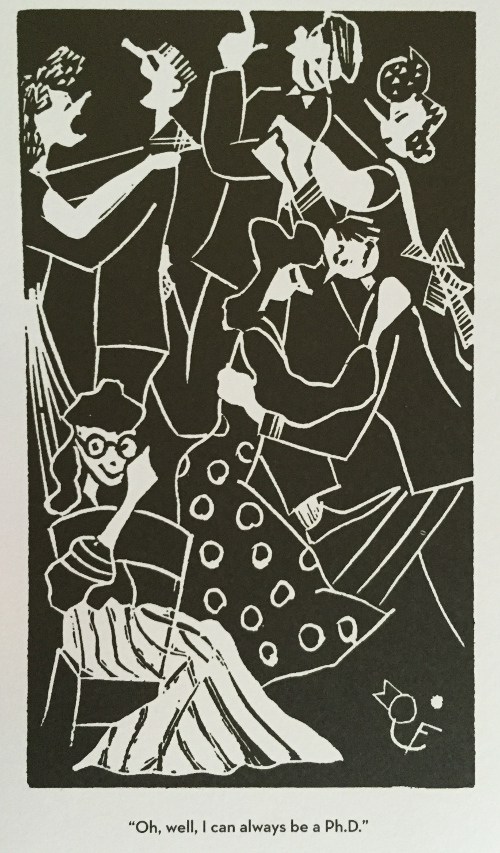
OConnor PhD

As a Southerner, Catholic, and fan of literature, one can easily guess that I’m a fan of Flannery O’Connor. If you haven’t read Wise Blood or her short stories, do yourself a favour and check them out. Her excellent collection of essays, Mystery and Manners, is also some of the best work I’ve read about literature.

When I heard about Fantagraphics Books releasing a collection of her cartoons, though, I wasn’t sure what to expect. Skill in one medium certainly doesn’t necessarily transfer to another, and most of these were originally published for her college’s student newspaper. Besides, there’s probably a reason she ultimately focused on writing rather than cartooning.
Opus (75 Books - XXXV)

I imagine all of my readers already know Kon Satoshi, but if you haven’t seen his films (Perfect Blue, Millennium Actress, Tokyo Godfathers, and Paprika) and TV anime (Paranoia Agent), go watch them. Even if you’re not especially interested in anime, they’re excellent and worthwhile for anyone interested in film. Before he started working in animation, though, he did comics, including the unfinished Opus, published late last year by Dark Horse.

The Legend of Zelda: A Link to the Past (75 Books - XXXIV)

One thing many people remember fondly about Nintendo Power magazine was that, besides just straight-up video game news, reviews, and the like, they’d occasionally serialise comics based on one of Nintendo’s popular game franchises. These could easily have been mailed in as cheap promotional material by C-grade artists, but to NP’s credit they were actually genuinely pretty good. I remember a couple of these, but unfortunately they stopped doing this not long after I subscribed, so I missed out on most of them. As far as I’m aware, few or none of these were published elsewhere, so unless you have these now-ancient back issues of a discontinued magazine, there’s no way to own a physical copy of them.

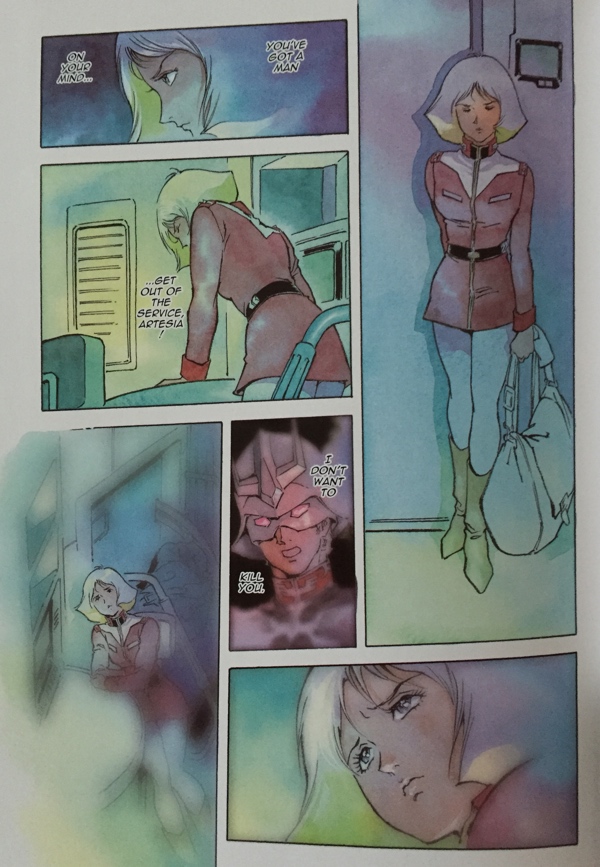
Mobile Suit Gundam: The Origin v. 6-7 (75 Books - XXXI and XXXII)

The sixth volume of Yasuhiko Yoshikazu’s Mobile Suit Gundam: The Origin picks up where the fifth left off with Char and Sayla’s backstory, but this and the seventh volume expand to include other major characters on the Zeon side, as well, going up to the start of events in the main storyline in the first volume. This gives the series an unusual structure where roughly the first four volumes proceed from what now seems to be the middle of the story, then the next three volumes cover the beginning. Now that the backstory has caught up to the beginning of the series, I assume that the eighth volume will jump to where the fourth left off. I’d be interested to know why Yasuhiko decided to structure the story this way; perhaps he wanted to make sure his adaptation began the same way as the original TV anime before going off on a different path, similar to how the first Rebuild of Evangelion film started mostly the same as its predecessor and only made major changes in the second film.

Oh My Goddess! v. 47 (75 Books - XXVII)

This series is going to end with a whimper, isn’t it?

I’ve been down on Oh My Goddess for a long time now; the series basically lost me way back in volume 41, and I’ve basically just been stewing in a fairly mediocre arc for three years waiting for it to end already. Things have improved somewhat in the last couple volumes, I suppose; Fujishima Kosuke is better at drawing motorcycle racing than he is any other sort of action, and the character art is still nice enough. The end is also in sight - this is the penultimate volume, and after two decades and change it does feel like the story’s wrapping up. Encouragingly, with this action-oriented story arc done the final volume should go back to a type of storytelling that Fujishima’s good at.

Limit v. 3-6 (75 Books - XXII-XXV)

I talked about the first two volumes of Suenobu Keiko’s comic Limit way back in March 2013 in a Bibliophile’s Journal post, and only this week have I gotten around to reading the other four volumes, which I read in a single sitting.

Now, that may make it sound like this is a real page-turner and I couldn’t put it down. Unfortunately, I blew through the books so fast because, well, there’s not really much to them. The story’s moderately entertaining, if a little overwrought, but as I mentioned in that previous post, it’s just Lord of the Flies but less plausible and without any of the symbolism. The characters come across as panicky and drama-prone, but only one of the characters is given a backstory reason for acting this way, and her story is a clichéd one. Perhaps my expectations of teenage maturity are too high, but I expect them to be able to spend a few nights in the woods without turning into, well, Lord of the Flies; even Lord of the Flies didn’t descend into Lord of the Flies this quickly.

Watamote v. 5-7 (75 Books XVI-XVIII)

Though I’ve been reading Watamote for a few years now, first via scanlations, then by importing the Japanese graphic novels, I’ve yet to write about it directly. I did talk about the anime adaptation shortly after it aired about a year and a half ago, and my thoughts on that still reflect my opinion of the first few volumes of the source material. As much as I love the early part of the comics, it is a formula that runs a high risk of growing stale - Tomoko comes up with a scheme to get popular quickly, or to impress someone else, this plan blows up in humiliating fashion, Tomoko learns little or nothing, repeat. Luckily, author Tanigawa Nico (actually a two-person writer/artist team) inserts some variety by giving Tomoko other people to interact with, early on her brother Tomoki, her cousin Kii, and middle-school friend Yuu. These volumes add another interesting dynamic by introducing Komiyama, a mutual friend of Yuu, and who has a crush on Tomoki. While we still see Tomoko making a fool of herself on her own like the early chapters, the most interesting parts tend to be those involving the trio of Tomoko, Yuu, and Komiyama. The added interactions also make Tomoko more easily relatable for those who, while uncomfortable in social situations, aren’t quite helpless as she appeared to be early on.

Mobile Suit Gundam: The Origin v. 4-5 (75 Books VII and VIII)

gundam2

I never thought I’d come up with a title more unwieldy than Rex Quondum Rexque Futurus: Kingship in Fate/Zero, but thanks to Yasuhiko Yoshikazu, I’ve outright crushed the previous record-holder. I’ve also changed the naming scheme of this series to make it less monotonous-looking, since this is obviously going to take up the vast majority of posts I write this year.

Anyway, my only previous experience with the Gundam franchise is the movie trilogy version of the original series and Char’s Counterattack. I watched those in particular because Daryl Surat, co-host of the Anime World Order podcast, recommended those four films as the quickest introduction to the franchise. I’m not a huge fan, but I liked them a fair bit; I’m also aware of Yasuhiko’s reputation and I’m a sucker for nice physical editions of books, and Vertical’s edition is gorgeous, so I went ahead and jumped for his Mobile Suit Gundam: The Origin, which adapts the original TV series.

75 Books in 2015 - V (A Bride's Story vol. 6)

It just occurred to me that I should’ve used the title “Bibliophile’s Journal” for this series, since this is almost exactly what I originally had in mind for the posts already using that title. I suppose I could go back and change it - there are only five entries so far.

Also: Once again I’m able to post two days in a row. My blagging prowess grows by the day.

75 Books in 2015 - II and III (Spice & Wolf)

When was the last time I managed to post on consecutive days? For that matter, when was the last time I posted on consecutive weeks?

Also, how should I format post titles? Heck if I know.

Anyway, I can knock out graphic novels pretty quickly, as evidenced by getting through volumes nine and ten of Koume Keito’s adaptation of Spice & Wolf. The first thing I noticed about these volumes is that I had totally forgotten what was going on in the plot at this point; such are the dangers of letting so much time pass between reading installments of an ongoing story. Confusing things further is that it seems to be a little past where I am in the original novels (vol. 6), but Koume also makes a few changes here and there.